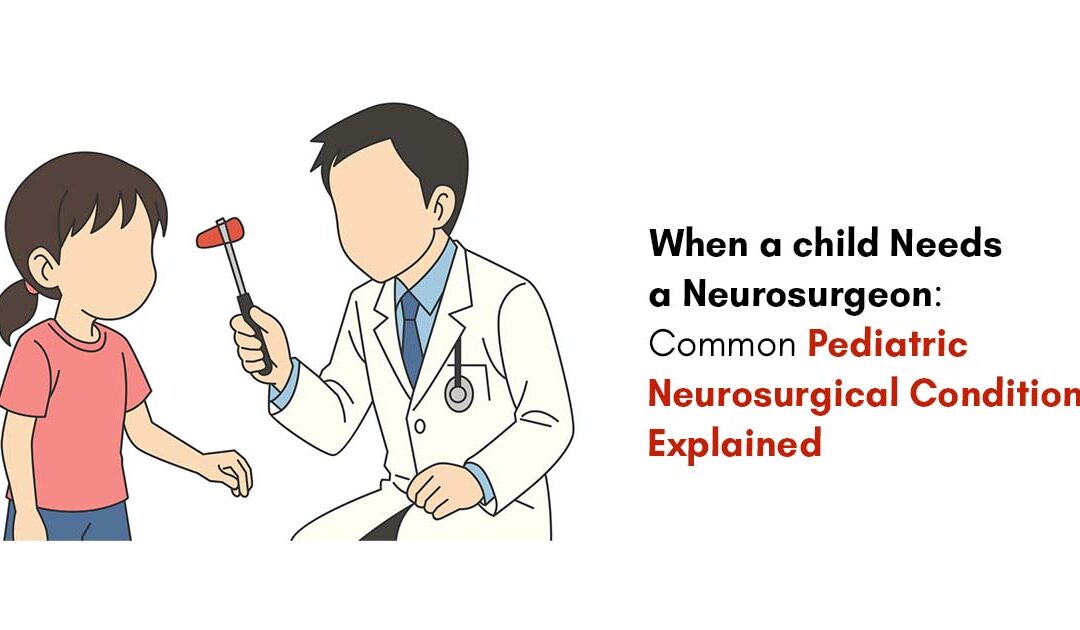
Learning that your child might need a neurosurgeon can be intimidating for any parent. However, knowing why a pediatric neurosurgeon is needed and what they treat can help create clarity and trust in your child’s care. Pediatric neurosurgery is the subspecialty within medicine that deals with assessing and treating disorders in a child’s brain, spine, and nervous system. When compared to adults, children have developing nervous systems, which makes their surgical and other care highly customized.
In this blog, we will discuss common pediatric neurosurgical conditions, how they get diagnosed and treated, and when to speak with a specialist.
What is Pediatric Neurosurgery?
Pediatric neurosurgery is the surgical care of children with neurological disorders known as conditions involving the brain, spinal cord, nerves, or skull. These surgeons are specially trained to consider more complex issues, while also considering the unique anatomy and development of children as they grow.
Common symptoms that would suggest a referral to a pediatric neurosurgeon include:
- Persistent headache and/or vomiting
- Seizures or unusual movement
- Delayed milestones or developmental regression
- Abnormal head size or shape
- Weakness, balance problems, or change in vision
1. Hydrocephalus (Excess Fluid in the Brain)
Hydrocephalus is one of the most common problems treated by pediatric neurosurgeons. Hydrocephalus happens when the cerebrospinal fluid (CSF) in the brain’s cerebral ventricles builds up and creates pressure, which can lead to damage in brain tissue.
Symptoms may include:
- Rapid head growth in infants
- Vomiting, irritability, or changing levels of alertness
- Poor feeding or a downward gaze of their eyes.
Treatment:
Routine treatment includes a surgical procedure and an implanted shunt system to drain the excess fluid or an endoscopic third ventriculostomy (ETV) to restore normal pathways for the CSF. With early diagnosis and appropriate medical care, many children can enjoy normal development.
2. Brain Tumors in Children
Brain tumors are one of the most serious problems that can be done in pediatric neurosurgery. These tumors can be benign (non-cancerous) or malignant (cancerous), but both types can impact vital brain functions that lead to alterations in motor, visual, or behavioral functions.
Warning signs:
- Frequent headaches especially early in the morning
- Nausea, vomiting or coordination difficulties
- Seizures or changes in personality
Treatment:
Having a brain tumor will vary based on the tumor’s type and location for surgical removal, and could involve chemotherapy or radiation therapy. Pediatric neurosurgeons are often utilizing advanced imaging systems and navigational systems to remove the tumor, while at the same time preserving healthy brain tissue.
3. Spina Bifida and Neutral Tube Defects
Spina bifida is a birth defect that involves incomplete closure of the spinal cord during fetal development. This can lead to some sort of physical disability and problems with bowel and bladder control.
Treatment:
In most cases, surgery is performed shortly after birth to close the defect and prevent further injury. In certain cases, spina bifida can now be managed prenatally (before birth), which can improve long-term outcomes. As children grow, ongoing care from a team including neurosurgeons, orthopedic surgeons and rehabilitation specialists can help maximize mobility and independence.
4. Craniosynostosis (Abnormal Head Shape)
Craniosynostosis is a condition in which one or more of the sutures of the skull fuse earlier than normal, preventing the skull from growing normally, and sometimes causing pressure on the brain.
Signs:
- An unusual head shape
- Slower growth of the head
- Developmental delays in severe cases
Treatment:
Surgical correction is typically performed during the first year of life to correct the head shape and allow for normal growth of the brain. The development of minimally invasive surgical techniques and helmet therapy has significantly improved both cosmetic and neurological outcomes.
5. Epilepsy Requiring Surgery
If a child has difficult-to-treat seizures, a neurosurgeon may evaluate him/her for epilepsy surgery. The goal with the epilepsy surgery is to identify the area of the brain that is causing seizures and remove the area while maintaining normal brain function.
The treatment alternatives are as follows:
- Focal resection: removal of the area of brain the seizures arise from
- Corpus callosotomy: cutting pathways of nerves that are spreading the seizure
- Vagus nerve stimulation (VNS); implanting a device to assist in seizure control
With advancements in several forms of neuroimaging and EEG monitors, many children achieve seizure control and a better quality of life.
6. Traumatic Brain and Spine Injuries
Children can incur traumatic brain injury (,TBIs,) or spinal cord injury from accidents, falls, or from sports. Pediatric neurosurgeons play an essential role in managing these types of emergencies while doing everything possible to minimize long-term developmental consequences.
Treatment:
The focus of care is to relieve pressure, repair the damage, and minimize complications. Rehabilitation and physiotherapy assist with recovery.
When to See A Pediatric Neurosurgeon
If parents notice:
- Developmental delay or regression
- Chronic headache or vomiting
- Weakness or unsteadiness for no identifiable reason
- Uncontrolled seizure/s
- Altered shape or abnormal growth patterns of the head
Timely diagnosis is crucial, as children’s brains are quite resilient and respond well to early intervention.
Conclusion
The term “neurosurgery” can seem overwhelming, but the progress of pediatric care has led to safer and more promising outcomes than there have ever been before. By becoming familiar with common conditions such as hydrocephalus, spina bifida, epilepsy and brain tumors, parents can be more empowered in making decisions about their child’s health.
If your child is exhibiting concerning symptoms, speaking with a pediatric neurosurgeon in good standing, can make all the difference. Detection, care by a specialist, and technique truly will provide the best chance for your child’s healthy and active future.